
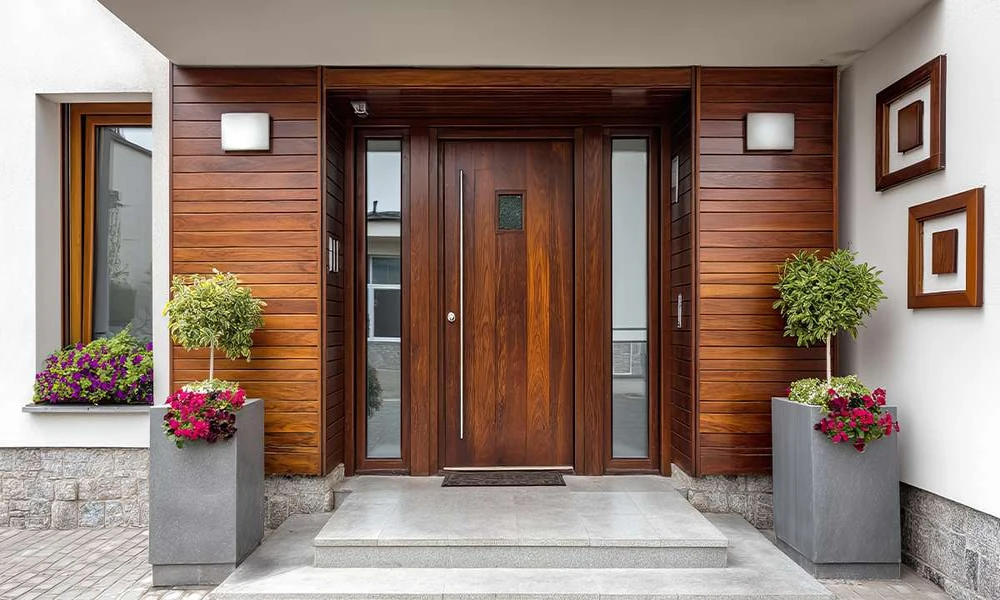

When selecting a door for your home, the first thing that probably comes to your mind is its design. After all, doors form an important part of the overall appearance of an interior. However, appearance is not the only factor that matters. The construction, strength, stability and type of wood used can make an equally important difference.
This is where an Engineered Door (ประตูไม้เอ็นจิเนียร์, term in Thai) becomes an interesting option. Unlike a conventional door made entirely from a single piece or construction of solid timber, engineered doors use a carefully designed structure to provide the beauty of real wood along with greater stability. But what exactly goes inside such a door? Let us understand.
What Is an Engineered Door?
An Engineered Door is manufactured using multiple components that work together to create a strong and stable structure. Instead of relying entirely on one solid piece of wood, its construction is engineered to help minimise some of the natural movement associated with timber.
The surface can still feature real wood, such as Oak or Teak. Hence, you do not necessarily have to compromise on the natural grain, texture and warm appearance that makes wooden doors so attractive.
How Is It Constructed?
The construction of an engineered wooden door is what separates it from many traditional alternatives. Its internal structure is designed for stability, while the exterior provides the desired natural wood appearance.
Factory finishing can further improve consistency and give the door a refined appearance before installation. Some engineered doors are also supplied as complete sets with door frames and subframes. Thus, different elements can be planned together instead of selecting every component separately.
Why Choose an Engineered Door?
Wood is a natural material. Therefore, changes in surrounding conditions can cause it to expand, contract or move over time. Engineered construction aims to provide better dimensional stability while retaining the character people expect from real wood.
A well-manufactured Engineered Door can also offer practical advantages such as strong construction, termite-resistant properties and factory-controlled finishing. Depending on the manufacturer, customised sizes may also be available for projects where standard dimensions are not suitable.
Where Can Engineered Doors Be Used?
Naturally, not every room or project has exactly the same requirements. A door suitable for a bedroom may have different design considerations from one selected for a living area, hotel, residential development or other architectural project.
Engineered wooden doors can work particularly well where the natural appearance of Oak or Teak is desired, but consistency and engineered construction are also important. Their clean appearance makes them suitable for several modern interior styles, ranging from minimal spaces to warmer contemporary designs.
What Should You Check Before Selecting One?
Before buying, do not select a door simply because the surface looks attractive. Check the wood species, dimensions, construction, finishing and whether frames or subframes are included. It is also useful to ask whether customised sizing is available.
Moreover, consider where the door will be installed and the conditions it will face. Proper product selection and professional installation can be just as important as the door itself.
Is an Engineered Door Worth Considering?
There is a reason why engineered wood products have become useful in modern interiors. They combine the natural appeal of wood with a construction designed around practical performance.
Thus, if you like the warmth and character of real wood but also want stability and a professionally finished appearance, an Engineered Door can certainly be worth considering. The key is to look beyond design alone and understand how the door is constructed, finished and suited to its intended application.
What Is an Engineered Door? Understanding Its Construction, Benefits and Applications

